Tutorial
From 80% Loss to 40% Profit: An AI-Powered Inventory Turnaround
Your inventory data holds secrets. We dove in with a Generative BI tool like Wren AI to uncover them. In minutes, we found a best-selling product that was actually a profit-killer, pinpointed the true source of our spoilage costs, and turned a money-losing promotion into a strategic tool to convert waste into profit. See the simple questions that unlocked thousands in savings.
Pin Chang
Updated: Nov 03, 2025
Published: Nov 03, 2025
Food waste isn't just bad for the planet; it's a direct hit to your bottom line. For years, the food industry has relied on gut feelings and messy spreadsheets to manage the delicate balance of inventory. Order too much, you're throwing away profits. Order too little, you face stockouts and unhappy customers. But what if you could replace guesswork with certainty? Generative BI tools like Wren AI are revolutionizing inventory management by allowing you to simply ask your data complex questions and get instant, intelligent answers.
The Bottleneck: Why Traditional Methods Fail
Let's be honest, the old way is broken. A manager at a busy grocery store or restaurant simply doesn't have time to:
- Manually cross-reference sales reports with purchasing invoices to calculate profit margins for 500 different products.
- Spend half a day filtering and pivoting tables to figure out why the "Seafood" category seems to be losing money.
- Wait a week for a data analyst to build a report on whether last month's "On Sale" promotion was actually profitable or just a revenue mirage.
By the time you get the insights, the opportunity is gone. This analytical delay is where profits go to die.
The Wren AI Revolution: From Data to Decision
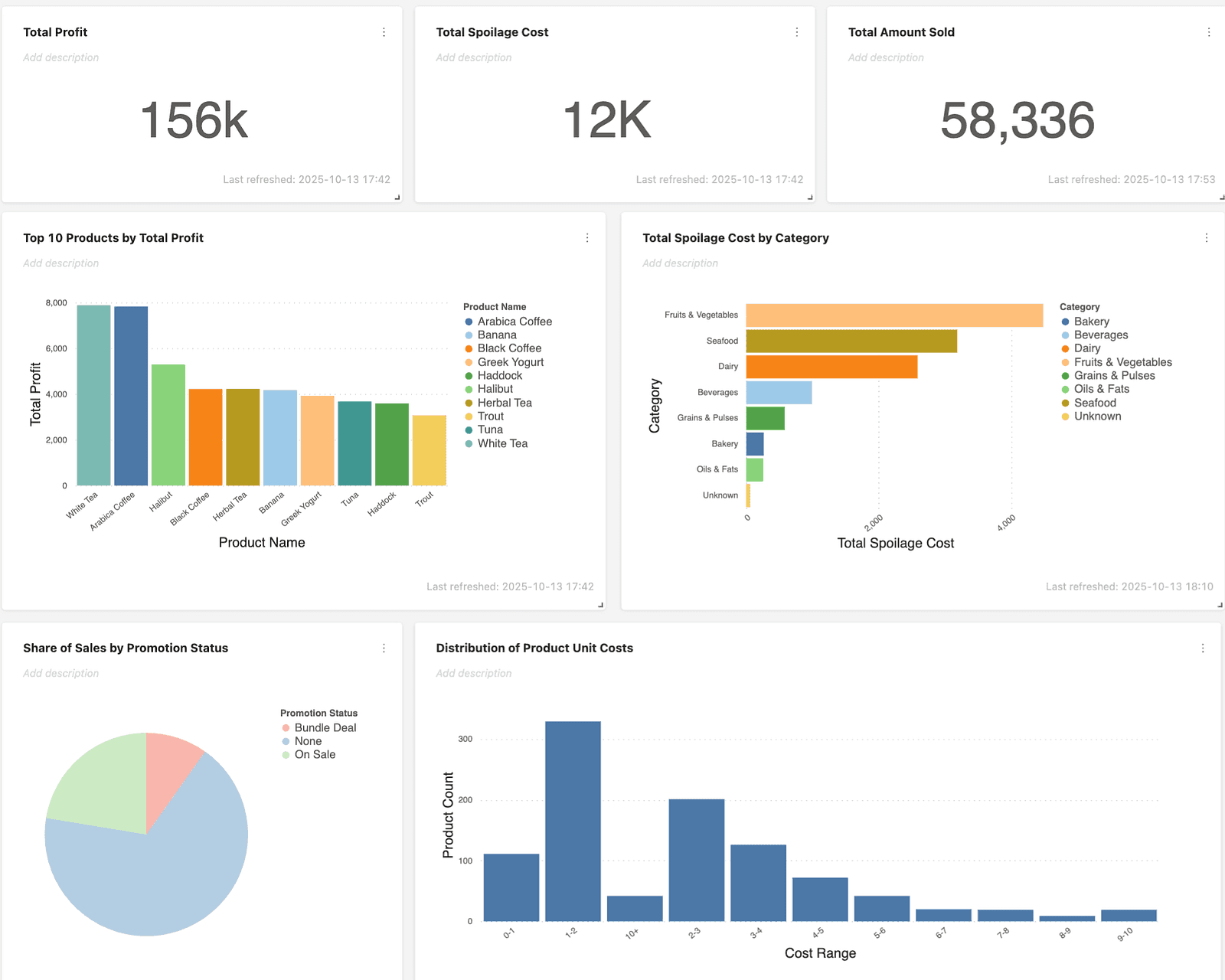
- Key Profit Centers: Beverage and Seafood products are our primary profit drivers.
- Major Spoilage Areas: Perishables like Fruits & Vegetables, Seafood, and Dairy carry the highest financial risk.
- Promotional Performance: Current marketing campaigns appear to have limited success, indicating a need for strategic review and optimization.
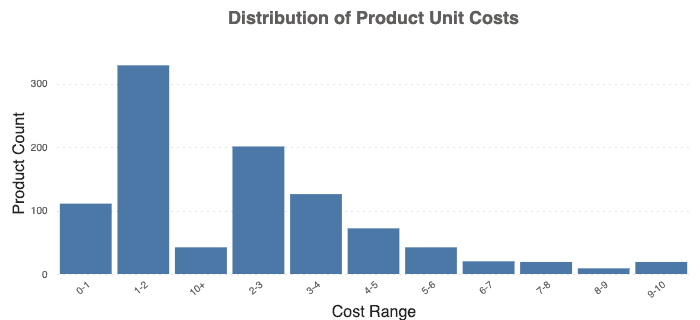
- Inventory Structure: Our capital is tied up in low-cost goods, making efficient turnover essential.
Let's dive into a few scenarios to see how this changes everything.
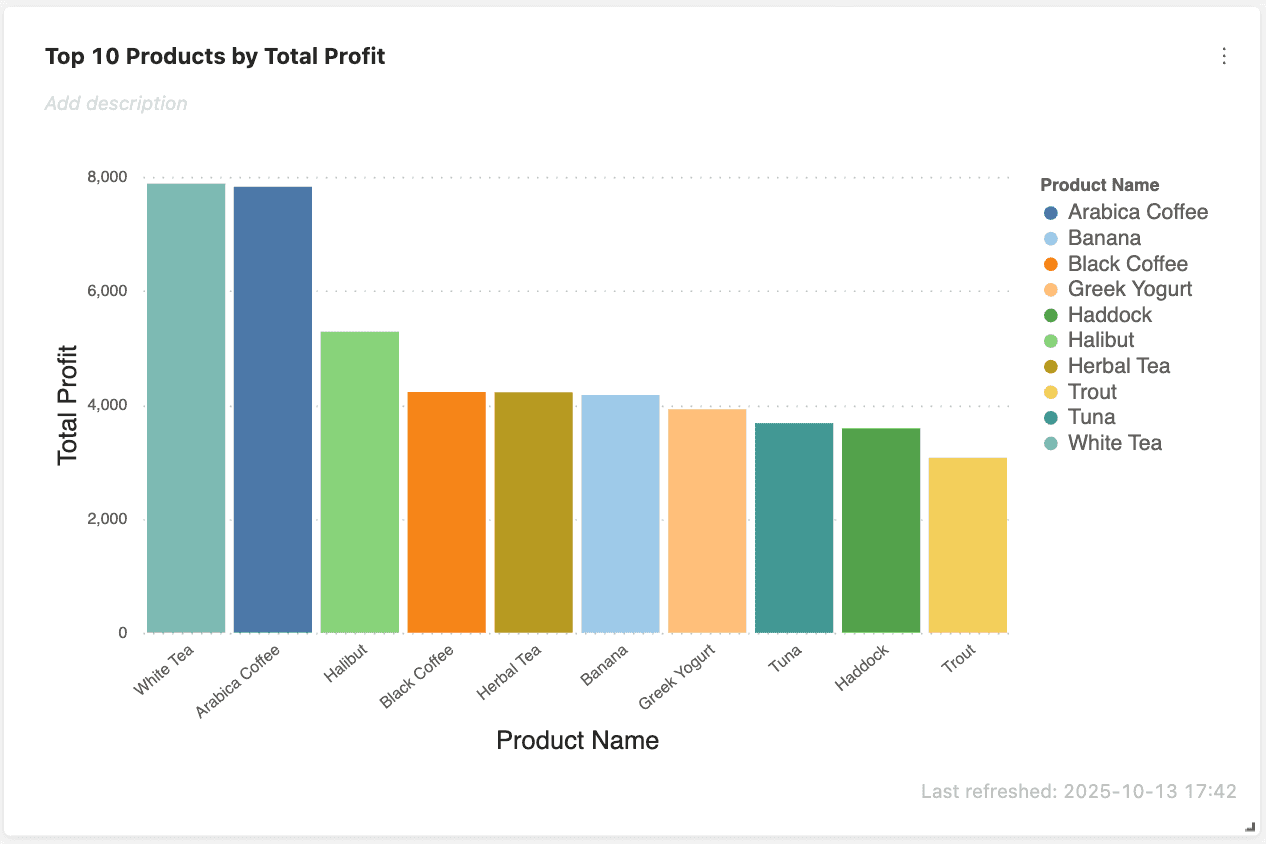
Analysis 1: The Profitability Mirage - Who's Really Paying the Bills?
"Show me my top 10 products by net profit, and make sure to subtract spoilage costs."
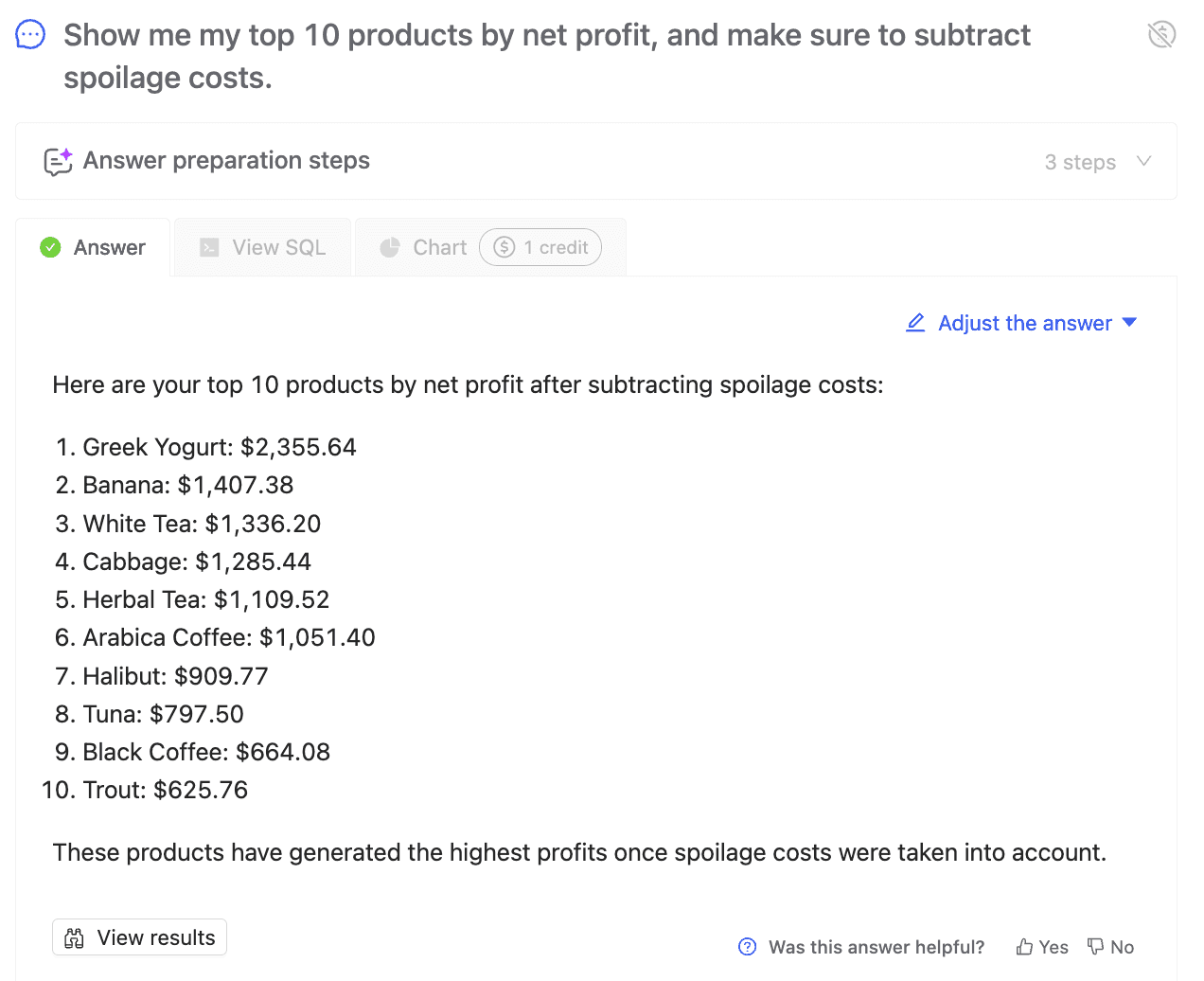
What makes this analysis trustworthy is that the business rules, like net profit, spoilage cost, and margin per item, are captured once in Wren AI's semantic model (MDL). Every answer, whether asked by a human on the floor or by an AI agent running a scheduled review, resolves through those same governed definitions instead of ad-hoc SQL. That's why "net profit" means the same thing in every question that follows.
Analysis 2: The Spoilage Detective - Finding the Leak
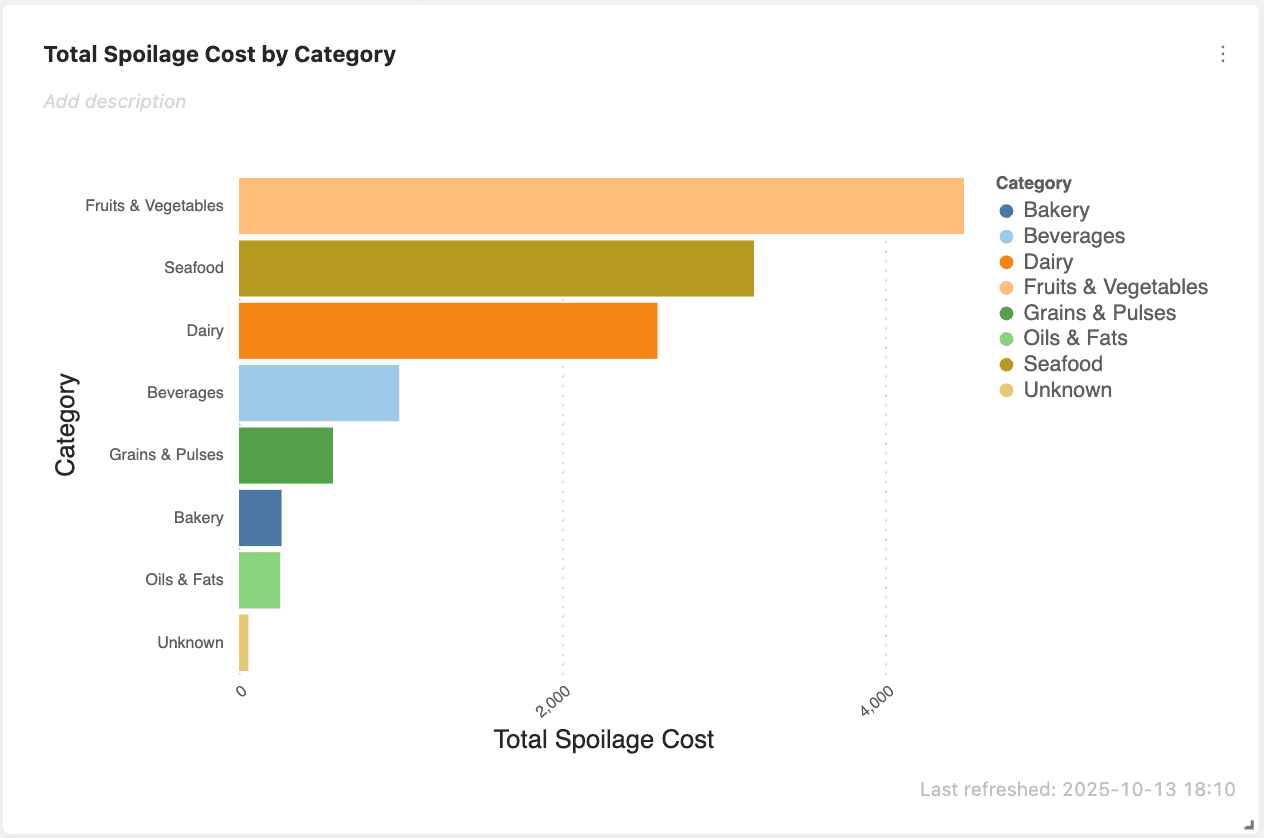
"In the Fruit & Vegetable category, which 3 products have the highest spoilage cost?"
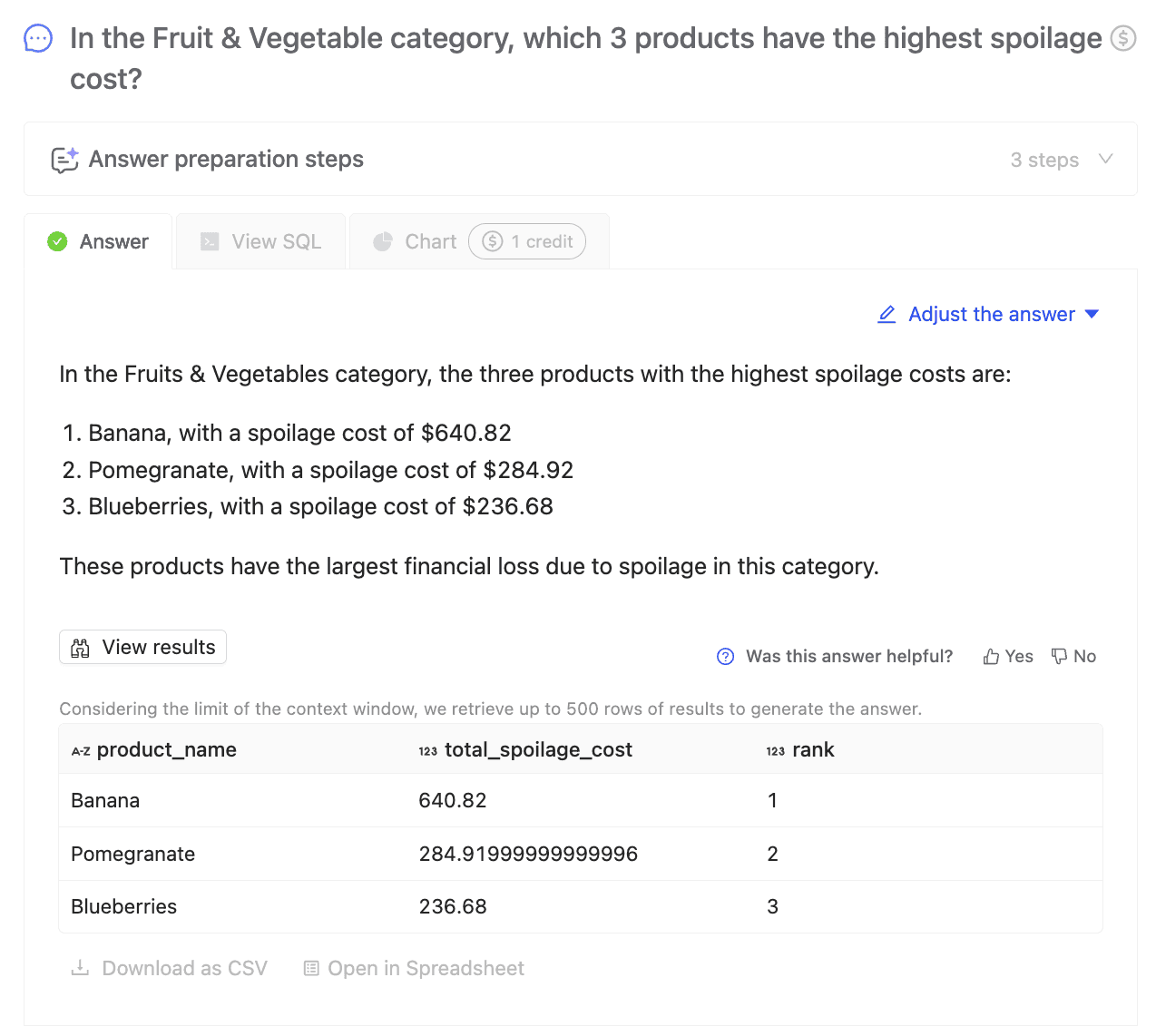
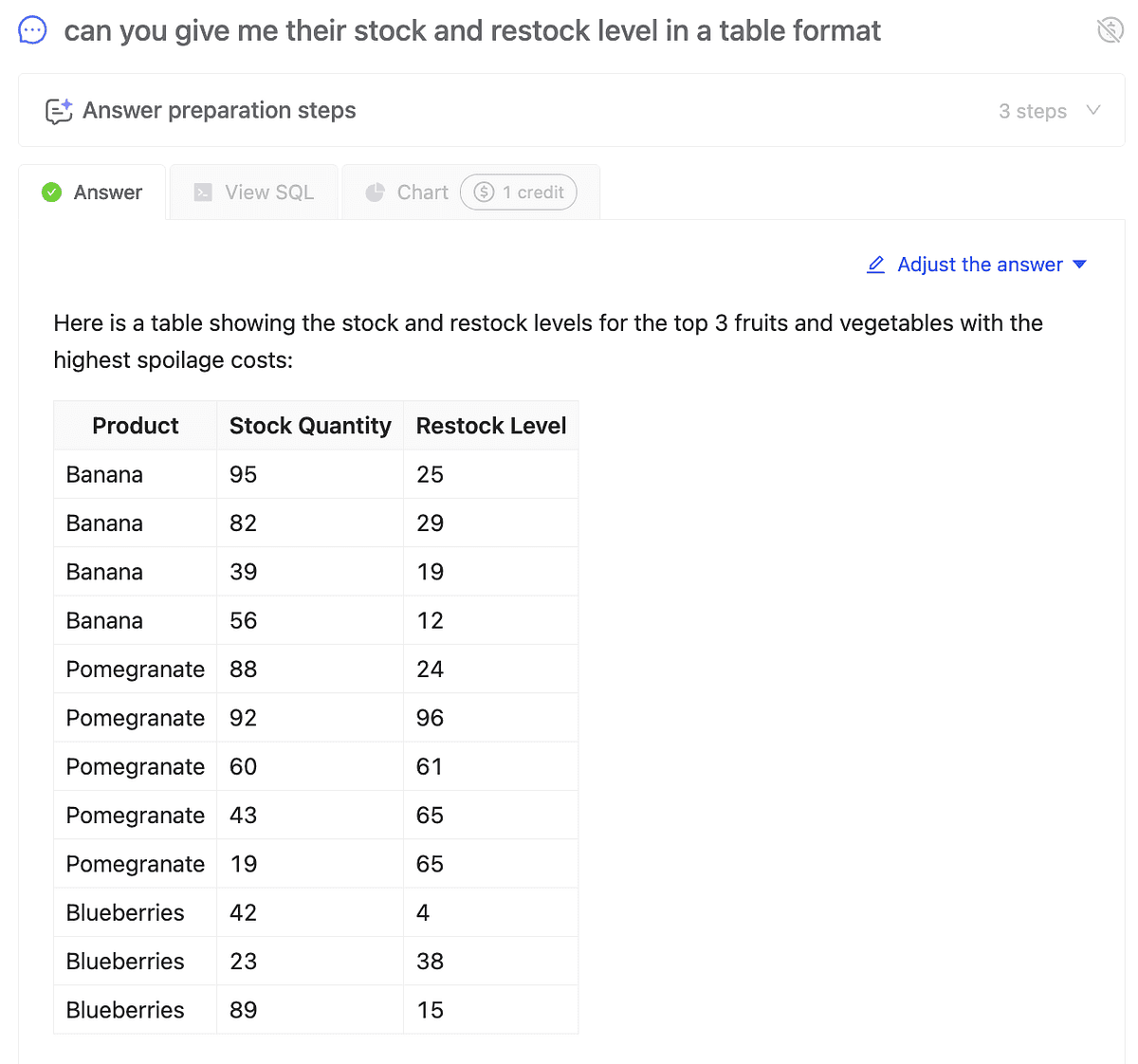
- Banana is being heavily overstocked. With a stock level of 95 and a reorder point of 25, you are carrying far too much inventory, which leads to unnecessary waste.
- Pomegranate shows the opposite pattern. In some locations, stock levels are below the reorder point, suggesting a sudden rise in demand. This often causes rushed and oversized restocks after a stockout, which then creates more spoilage.
The Action: Adjust the reorder levels and quantities for these items. Lower the reorder quantity for bananas to reduce excess inventory. For pomegranates, raise the reorder level in selected locations to trigger smaller and more consistent restocks, preventing the cycle of shortages and waste.
Analysis 3: The Promotion Paradox - Are Our Discounts Actually Costing Us Money?
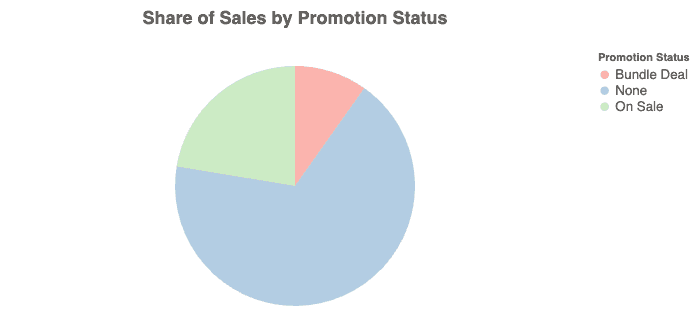
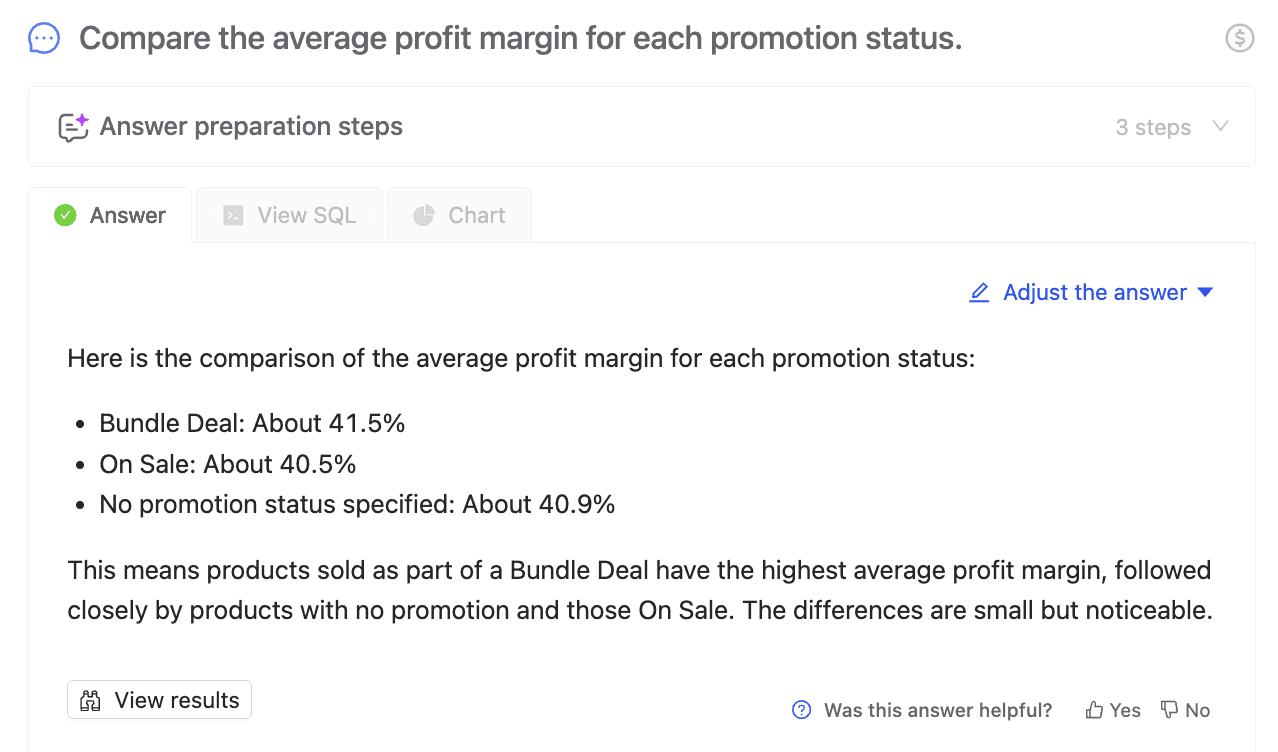
"Compare the average profit margin for each promotion status."
"Show me products in the 'Fruits & Vegetables' category with high spoilage quantity and an expiration date in the next 7 days."
This way you are not just minimizing a loss; you are transforming a potential loss into a gain. You can immediately implement a new "Waste Watch" protocol. Using Wren AI, we'll identify perishable items nearing their expiration date and strategically deploy a margin-neutral "On Sale" or "Bundle Deal" to accelerate their sale. This transforms a potential 100% loss into a gain.
Analysis 4: The Strategic Matrix - What to Grow, What to Cut
"Plot my products based on their inventory turnover and profit margin."
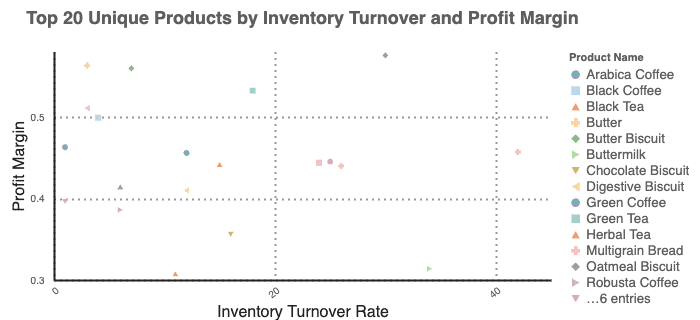
- Stars (High Turnover, High Margin): Your champions. Protect and promote them.
- Workhorses (High Turnover, Low Margin): They are essential for driving traffic but aren't huge profit centers. Maintain competitive pricing and look for bundling opportunities. (e.g., "Taco Tuesday" kits that include low-margin onions with high-margin flank steak).
- Hidden Gems (Low Turnover, High Margin): Highly profitable niche items. Ensure they have good visibility but don't overstock.
- Problem Children (Low Turnover, Low Margin): Clear candidates for discontinuation to free up capital and shelf space.
The Future is Conversational In minutes, we've uncovered misleading top-sellers, diagnosed cost leaks, and built a data-driven strategy for our entire portfolio. Wren AI closes the gap between data and decision, turning inventory management from a chore into a competitive advantage. The food industry will always be a game of thin margins, but with tools like these, you're no longer guessing. You're having a conversation with your inventory and getting clear, intelligent answers back. Ready to transform how your organization accesses data? Request a demo or start your free trial at getwren.ai
See governed GenBI in action
Watch short demos of Wren AI turning business questions into governed SQL, charts, and reusable GenBI apps.
Watch product demosRelated posts
AI-Powered Business Intelligence: The Complete Guide to GenBI
Discover how Generative Business Intelligence (GenBI) powered by Wren AI is transforming data access with conversational AI, real-time insights, and intuitive decision-making tools for modern enterprises
Apr 01, 2025Beyond Text-to-SQL: Why Feedback Loops and Memory Layers Are the Future of GenBI
How Wren AI’s Innovative Approach to Question-SQL Pairs and Contextual Instructions Delivers 10x More Accurate Generative Business Intelligence
Jul 18, 2025Conversational BI Empowering Self-Service Analytics with Wren AI’s GenBI
Self-service analytics has reshaped business intelligence (BI) by enabling non-technical users (marketers, customer success managers, executives, and operations teams) to explore data independently, without relying on data experts.
The Wren Journal
Get the next deep dive in your inbox
Practical GenBI guides, product updates, and customer lessons from the Wren AI team. A couple of emails a month, no noise.

Keep reading

Insight, Product
AI-Powered Business Intelligence: The Complete Guide to GenBI
Discover how Generative Business Intelligence (GenBI) powered by Wren AI is transforming data access with conversational AI, real-time insights, and intuitive decision-making tools for modern enterprises

Insight, Product
Beyond Text-to-SQL: Why Feedback Loops and Memory Layers Are the Future of GenBI
How Wren AI’s Innovative Approach to Question-SQL Pairs and Contextual Instructions Delivers 10x More Accurate Generative Business Intelligence
Product, Insight
Conversational BI Empowering Self-Service Analytics with Wren AI’s GenBI
Self-service analytics has reshaped business intelligence (BI) by enabling non-technical users (marketers, customer success managers, executives, and operations teams) to explore data independently, without relying on data experts.